Simple

Settling back into my life in Minneapolis has been time spent reflecting, adjusting, and pondering what I want my life to look like moving forward.  I’ve spent the last 4 years making adjustments to my life, scaling back the number of hobbies and interests that I attempt to fit into my life, or ridding myself of all the things that weigh me down.  I’ve done this not really knowing where it’s leading me except for the ability to pack up and travel someplace with more ease and security.

You see, I’ve often spent my life thinking in terms of destinations.  I’ll convince myself that once I arrive at someplace, I can finally think of my life as successful or that I’m well on my way to achieving happiness and contentment.  I’ll often think about that next skill or success that will open up a door to greater success and happiness, while only whittling away more free time from just being or enjoying the time that I have.

I rented a car for the first week that I arrived home, thinking that I would find an old clunker to drive around within the first week.  I had intended to adopt all of the interests that I filled my time with before leaving on my grand adventure.  But a peculiar thing happened during that time.  I came to realize very quickly that I didn’t really miss having to pay for all the things necessary to operate a vehicle such as gas, title, insurance, etc.  I also didn’t miss having to fight for my safety against all the other idiots on the road.  After a week, I gave up my rental car with no other options than to ride the metro system.  My roommate also gave me a Go-To card for the metro so that I could get around.  We posited that if I could just get through the next couple of weeks until the snow melted and it became easier to be outside, that I might get used to the metro system.  Coupled with buying a bicycle, I might even be able to adopt a new healthy lifestyle where I might not even need a vehicle in my life.

It’s been a noble quest.  After almost 5 weeks of using the metro system, I’m finding that I have become more tolerant of the metro system and am finding it to be a viable source of transportation around the cities.  Obviously, anyplace that I want to go now requires more planning and effort.  But that is surprisingly okay.  I’m now forced to make a decision as to how much I really want to go somewhere.  I’ve now removed many situations where I go someplace only to be disappointed that I spent the effort and time to go.  And with limited space in which to carry things, I now shop for food in much smaller quantities.  I am finding that not only am I using less space to store food, but this constraint is also helping me alleviate the problem of food getting forgotten and spoiling.  Using the metro also requires me to walk a lot more than I normally would.  I’ve spent more time enjoying the scenery around me, and getting exercise without having to make an effort to get to the gym.  I’m starting to consider getting rid of my gym membership as well.  My world has become smaller in terms of where I go and what I do.

However, Minneapolis is no Chicago.  We lack an extensive subway / lightrail system that other large cities offer.  I don’t always feel safe riding some of the buses late at night, or even the lightrail for that matter, when the stop is right outside some bars.  I can pass the time easily during the day reading a book or my nook between destinations.  That is as long as the other patrons are relatively quiet and not screaming into their phones, or trying to pick a fight with someone, or arguing about sports or which is better, Kentucky Fried Chicken or Popeyes.  “I’m talkin’ bout the colonel!!  The colonel, man!  He’s responsible for all those hot sauces.”  It’s distracting to say the least.  And unfortunately, when I consider my own tolerance to the white noise of life, I find that I’m starting to lean towards buying a car for myself.

I mentioned in the last post, arriving at my friends storage shed only to discover that after living out of a bag for the last 4 months, that I could easily dispose of many of the things I had stored while away.  I’ve spent the last couple of weeks organizing and determining which things I’m going to rid myself of.  Being back and anticipating making some roots for at least the next 6 months to a year has caused me to fight my impulses for lightening my load a bit.  I try and convince myself that I will now need many of the items in storage.  But I know in my heart, I probably won’t.  I can probably get rid of my snowboard.  When I only snowboard once or twice a year, it doesn’t really make much sense to keep a snowboard around; especially when I can rent that equipment at a resort.  I’m finding that I don’t need near as many of the kitchen supplies that I think I do to make a good meal.  And I definitely don’t need all of the clothes that I’ve acquired over the last decade.

All of this has been an exercise in quantifying how much I need to be happy.  We make excuses for why we cannot have the type of life that others have.  Or, we make comparisons and assumptions about the quality of life that other people have without having the perspective of actually experiencing life in another way.  Rarely will we put ourselves in those situations by choice, but once placed into those situations either inadvertently or by circumstance, we readily adjust and find that what we had before wasn’t all that great and that how we live our life now is quite simply, better.  And that is the crux of my education.  I’m finding that rather than happiness being found by arriving at a destination, it is instead being found by simplifying my life so that I might spend more time enjoying the simple things in life.

Clarity

sky

I remember having a beer with my friend, Geoff, before leaving, and lamenting how disappointing it would be to go off on my adventure and return without having found what I have been looking for (purpose, vocation, etc).  Being one of my many wise and astute friends that I surround myself with, Geoff readily responded that my goal should not be to “Find Myself”, but only to find clarity in my life.

So there I was, 4 weeks before making my return home when my mother questioned me “How are you going to process this trip after you get home?”.  The truth is, I had already been sifting through my memories, looking for the truths and feelings that resonated with me the most.  I knew that upon arriving home, my friends and family would be curious to hear about my favorite adventures and hoping to understand some of the things that I took away from those experiences.  Personally, I find it difficult to define my favorite adventure or experience.  There were so many fantastic experiences that to choose one or two would somehow De-emphasize the others, and that unfortunately is something I’m unable to do.

For me, travel is about the people.  The places, adventures, and activities are just the icing on the cake. Those experiences really do not mean so much without the people that you encounter along the way.  The validation that I received from people was incredible.  Everyone I met, understood what I was doing and why I was doing it.  And everyone was full of ideas and untapped creativity.  It spurred me to think about my pursuits in an entirely different way.

Connection in this world may be the single most important quest in this life.  I don’t want to say that I have the answer to life, the universe, and everything (42), but it seems to me to be one of the most important quests I’ve ever undertaken; and one of the most enjoyable.  While on my adventure, I became very inspired reading about the Connection Economy in The Icarus Deception by Seth Godin.  The only way we are able to achieve anything of value in life, and to create the art that we’re capable of, is through the connections that we make along the way.  These connections can be personal, emotional, intellectual, or spiritual.

I’ve learned that we have it good in this country.  I’ve seen so much poverty.  People selling their handiwork on the streets with their children sitting beside them.  I’ve met so many people with the drive to try and make something / anything happen. The excuses that I’ve been making for myself cannot stand moving forward.  While I’m fearful of falling flat on my ass for trying something ambitious and crazy from time to time, I have a really good track record of walking away from such events with a minimal amount of injuries, both physical and emotional.

Attitude and perspective go a long way.  While we cannot control all the challenges that pop up in our lives, we can control how it affects us and how we treat other people along the way.  Treating people badly because we’re upset (even if the person in question is the one making us upset) never leads to anything positive. And getting upset or worried does absolutely nothing for us, except take away our peace of mind and cloud our judgement.

I’m much happier living a smaller or more simple life. Before I left, I sold many of my belongings and then stored the remaining things in my friends storage shed.  When I returned home and then traveled to his house to fetch some of necessary items, I was immediately struck by the number of items I had stored, that I now realized I could live without.  After living out of a backpack for 4 months, you realize how much you really need to be happy.  I think I’ve also started to look at ownership in a completely different way.  What good is having something when you only use it a fraction of the time?  Convenience?  Yet the “weight” of ownership bears down on our shoulders.  By “weight”, I mean the need to store said item; or the responsibility of keeping said item in good, working condition; or the worry we have if someone may steal it while we’re not present.  It doesn’t make sense to me the energy we expend to have so many things.  Understand though, I’m not suggesting we give up all our valuable possessions.  I’m only suggesting that we trim the excess of that which we do not use often enough.
I believe that it is necessary that we have passion in our lives.  I feel there’s an uneasy trend where passions are stifled, because it causes fear.  To feel so strongly about something that you would risk almost everything can seem a bit childish or impulsive.  But, coupled with wisdom; the wisdom gained from failure; passion is essential to pushing us forward and past all expectations and assumptions.  You cannot create something great without passion.  And we need to focus on our passions more.  More passion.  Less monetary gain.  We should concentrate on the things that we love, rather than the money or gain that we hope to achieve in the future.  Nor should we fear failure, for failure produces wisdom, which only makes us better at the art that we create.

And lastly, slow down and savor the moments in your life.  Appreciate them.  You will not always be happy.  You can escape and travel the world for four months; or maybe a year; but things will not always be what you expected.  You’ll be disappointed from time to time and you’ll be challenged by forces beyond your control.  To savor the truly amazing and memorable moments in your life is to appreciate the challenges and hardships that you’ve endured; and that my friends is what living life is all about.

Faces

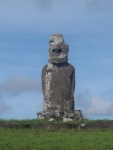
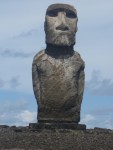
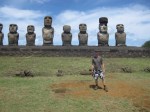
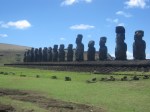
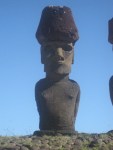
Situated in the South Pacific, over 3000 kilometers from Chile, is a small island that is home to a number of statues carved out of rock.  It’s one of the most isolated places on the planet to visit.  The allure of traveling to Easter Island comes from trying to understand where the stone statues came from, and how they were moved to their current locations.  Since childhood, I have wanted to visit Easter Island.  There was something spooky and mysterious about an island full of face statues, and I wanted to be there.

When I first started planning this trip, I knew that I wanted to incorporate Easter Island into it somehow.  This has been a dream in the making for over 30 years.  Logistically, it’s a more difficult destination to get to.  One must travel either from Santiago, Chile or Papeete, Tahiti.  Only one airline services the island and that is LAN Airlines.  Ticket prices are not cheap, and the fact that I was going during their Tapati festival makes it even that much more expensive.  But hey – you only live once, and I didn’t want to go though my life not having visited one of the more interesting places on the planet.
When I finally arrived in Easter Island, I handed over the 60 US dollar park entrance fee and then was picked up by my hotel.  Tekena Inn is a nice little Inn situated on the main road that cuts right through the center of Hanga Roa, the only town on the island.  It’s quiet and the breakfast is solid.  The internet is basically non-existent, but then again, you’re on the most remote place on the planet.  There’s really no good internet anywhere.  I dropped my gear and got my bearings by walking down to the area where most of the Scuba Dive shops are located.  I was pleasantly surprised to find Peace Boat docked right off shore behind the Moai Te Ata Hero.  A friend of mine had spent a number of months the prior year on Peace Boat.  I stopped into Orca Dive Center and scheduled two dives for the upcoming Monday and Tuesday.  That would give me 2 – 3 days prior to that to explore the archeological sites on the island.  I later wandered around and ate dinner at Te Moana and later walked to Tahai, right outside of town where a couple of Moai stand with their backs to the ocean.

The next day, wanting to see more Moai, I rented a bike for 10,000 Chilean pesos and set out to explore the west side of the island.  I first stopped in and visited the museum.  Next, I made my way to Te Peu and slightly beyond.  The road to Te Peu is a rocky dirt road, and as you go farther, it becomes a bit treacherous.  It’s best to have a 4 wheeler or jeep to traverse this road, although at some point, visitors are not allowed to continue on in any vehicle as it must be done by foot.  I returned to Tekena Inn later in the day sore and tired from my bike ride.

Not having seen many Moai the prior day, I set out the next day again on a bicycle with a plan to see as many Moai as possible.  The guy at the bike rental advised me to take the paved road up through the center of the island and then come back along the coast.  Honestly, I’m not sure why I decided to rent a bike again, as I was still a bit sore from the day before.  With the bike seat reminding my ass that I obviously hate it, I set out on my adventure.  After stumbling upon a small unlisted statue on my map, I accidentally arrived at another unlisted gem – Jardin Tau Kiani, a beautiful botanical garden.  The garden reminded me a bit of a Japanese garden where oriental statues were replaced by small Moai replica’s surrounded by exotic plants indigenous to the island.  A groundskeeper started offering me advice about the location of archeological sites of interest on the island and how to get there.  I was struggling with my Spanish and unsure if I was understanding him much.  The conversation quickly deteriorated into Spanglish intermixed with vague hand gestures and confused looks.  I clumsily got back on my bicycle and headed out.

I finally arrived at A Kivi, confused and realizing that I had been going in the wrong direction.  Thinking that I had botched my plans for the day, I continued onward and miraculously located the main highway again and finally arrived at the other end of the island, tired and sore.  I started to curse myself for this fools errand.  Having traveled close to 20 kilometers, I was not sure if I’d be able to walk properly the next day.  But, that’s how I roll – unprepared and uncomfortable.  I reminded myself that it was an adventure and that it would make a great story to tell my friends when I arrive back home.

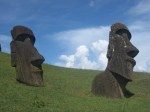
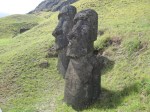
I quickly located the beach at Anakena and dismounted my bike for awhile.  I walked across the entrance and visited the two platforms supporting Moai overlooking the beach.  What a spectacular view with palm trees, statue, sand, and ocean.  I decided to get into my swim trunks and take in some relaxation on the beach.  After an hour of some swimming and sun, it was time to continue my quest.  Following the road to the east and south, I made my way around Maunga Puakatike to Tongariki and Rano Raraku (the Moai quarry).  Many of the pictures you see in books are of the stone statues from Rano Raraku.  It is one of the those places that leaves you in awe and feeling blessed to experience this place in the flesh.  It was here that I met James Grant-Peterkin, a British native living on Easter Island and founder of Easter Island Spirit.  He was at Rano Raraku helping a cameraman get pictures for a new documentary on Easter Island that was being produced.  James was very personable and I enjoyed talking with him a bit.  Before heading out, I found myself hungry and I knew that I would need some energy to make it back to Hanga Roa.  So, I went to the cafeteria and ordered what became the best banana bread I had ever eaten.  I spent the next hour riding back to Hanga Roa, alternating between a sitting and standing position as I was exhausted and sore.  In fact, I was so sore that I spent the next day recovering from my 40km bike ride the previous day.

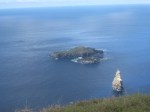
Monday, I awoke early for my dive.  The dive site that day would be Hanga Roa (also named after the town) where there is a fake Moai placed at the bottom at about 15 – 20 meters deep.  Arriving upon the site, everyone had their underwater camera’s, including me, ready for the photo-op.  The water in Easter Island is really clear due to the low plankton levels and lack of pollution.  You can sometimes see up to 200 feet underwater.  But while the visibility is crystal clear, the sea life is not that exciting.  I was fortunate enough to capture a sea turtle swimming not far from our group.  At the surface, I was able to meet one of my dive partners that day, Vanessa, who comes from Chile.  I would bump into her many times during the course of my trip.  I spent the rest of the day relaxing and checking out the artisinal markets.  The next day, my dive was at Motu Nui, a giant wall of coral.  Our group went to 30 meters before returning to the surface.  All around, I had a great time diving.

The next couple of days, I spent my time relaxing.  I eventually rented a scooter and checked out the volcano at Rano Kau, the stone village at Orongo and Ahu Vinapu.  During this time, I got a ride up to Cerro Pui where participants in the Tapati festivals, Haka Pei competition slide down the hill on sleds made from the trunk of banana trees.

Back in Hanga Roa, I often ate at a dive bar a block from the dive shops.  It was here that I ran into Vanessa again.  Between my bad Spanish and her bad English I came to learn that her Easter Island trip was a gift to herself because her Cancer had recently gone into remission.  Again, I had the privilege to meet someone that was conquering life’s challenges and living their life to the fullest.  If there was anything to take away from this trip, it would be the number of people with truly inspiring stories that I had continued to run into.  Later, I was fortunate enough to watch Vanessa join other tourists alongside the community for a parade in which everyone paints their bodies and wears traditional celebratory garb to celebrate the heritage of Easter Island.  And then, before returning back to the mainland, I would take my scooter up to Anakena for one last visit to the beach for some ocean and sun.

I spent my last night on Easter Island, again at Te Moana, outside, dining on grilled fish with coconut and pineapple sauce served with mashed potatoes.  With a glass of Chilean Merlot in my hand, I gazed out at the ocean and enjoyed another spectacular sunset.  I had done this.  A journey that I had envisioned for years, it took a lot of sacrifices and changes on my part.  But I was here and incredibly grateful for the fortitude, strength, and support of my friends to make it all happen.  Topping off this gorgeous sunset, I ordered up a serving of their coconut helado.  Taking a bite, I realized that I had reached my goal and was ready to head back to the mainland.  To be honest, 9 days was a bit much and I was ready to go.  I had mixed feelings.  This was the start of the end of my trip, and I’d be making my way back to the United States in the next couple of days after returning to Chile.  It’s been an incredible journey and I’m having trouble processing everything that I’ve experienced and understanding all the new feelings I’m having.  The journey’s not over, but I think it will change a bit from here on out.  Stay tuned for more posts where I hope to illuminate the fog a bit more.

Of Art and Soul

Santiago

Sometime before leaving on my grand adventure, I had contacted Tona, a friend of mine who grew in Chile to see if she might be around to meet up while I was in Santiago.  Unfortunately, she’s currently studying in San Francisco.  I guess that’s what I get for letting my friendships go idle.  However, she did put me in contact with a friend of hers that lives in Santiago, Esteban, whom agreed to host me and show me around a bit.  After arriving, I hopped a taxi into town and soon after, met up with my host.  We were both hungry, so he took me to the Harvard Bar, a bar right outside the campus area for a beer and some Chorillana, a Chilean bar food consisting of fries topped with meat, egg, onion, and sausage.  We discussed my plans which included heading to Valparaiso in a couple of days.  Luckily for me, Esteban would be heading there the next evening to be with his girlfriend and offered to meet up with me on Sunday to show me around.  Valparaiso is Esteban’s favorite city in the world which not surprisingly is the place that he grew up.

The next day, I first got my bearings by locating the tourist office in Providencia, and then I was able to track down a dealer of EBook readers in town and replace my stolen Nook.  I’ve felt so lonely the last month not being able to go someplace and read the many books I had selected for my trip.  Afterwards, I decided to seek out the Japanese garden located at the Santiago Metropolitan Park.  After walking all day, I was exhausted.  I stopped by a small food store and picked up some Empanada’s and a Danky.  It would be dinner at the apartment and then off to bed.  Esteban arrived later, collected his things, and then was off to Valparaiso.

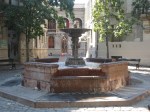
The next day was spent checking out Santiago where I took in most of the tourist sites.  I started by checking out Barrio Brasil and the Concha y Toro neighborhood.  It’s a street with late 18th century / early 19th century buildings.  It’s a peaceful neighborhood with park benches, water fountains, cafes, etc.  While looking for a cafe, I stumbled upon Hostel Tales, where Scott, the  attendant greeted me at the door and invited me in for a cup of tea.  Scott, originally from the US, looks to be in his early 50’s.  We talk about Chilean culture.  He moved there, because, as he describes it, the people are much more welcoming and “dating” after your 30 is a joy, rather than the chore he perceives it in the US.  I also make the acquaintance of Kherfia, a French traveler of Arabic descent.  I’m overjoyed to be able to practice my french with her.  Scott invites me to join a group that he’s taking down to the Lakes region in Mid-February.  I take down his information but do not make any promises.

I spend the rest of the day checking out La Moneda, a site of historical significance in Santiago.  It’s a building that was originally built for producing and distributing Chile’s currency but later became the site for politicians.  It’s not much of a tour, and I found it mostly uninteresting.  Afterwards, while searching for a place to sit down and have some tea, I stumbled into Cafe Bombay, a coffee shop that Chileans commonly refer to as “Cafe con Piernas” or “Cafe with Legs”.  It’s a new thing popping up in coffee shops around Santiago where the waitresses are dressed very provocatively.  Coffee and Tea never looked this good.

I finished off the day by eating lunch at Mercado Centro and later having dinner at the MosaiCafe in the Patio Bellavista.  I went home soon after, ready to take a bus to Valparaiso in the morning.

Valparaiso

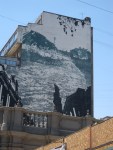
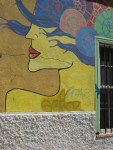
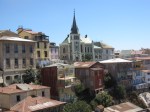
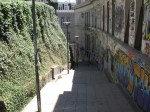
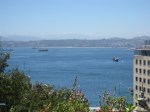
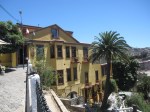
The bus ride to Valparaiso from Santiago is roughly 2 hours straight through Chilean wine country.  If you have the time, you can stop off and tour some wines in the Casablanca valley.   I arrived in Valparaiso and after locating my hostel, La Casa Volante, I met up with Esteban for a quick tour of the historical part of the city.  Valparaiso seemed in many ways similar to Naples, Italy for me.  It’s a bit dirty but there’s culture and art all around you.  The city is filled with brightly-painted staircases leading up to all the cerros.  Walls throughout the city are painted with amazing murals.  This isn’t graffiti.  It’s art where many creations are of the caliber found in many post 20th-century, contemporary art museums.  And of course there are the walkways and balconies that cover the city, overlooking the harbor filled with all kinds of shipping and naval vessel imaginable.  After walking for an hour or two, taking photos of every kind of art or vista imaginable, Esteban takes me to Los Portenos in Plaza Sotomayor for lunch.  It’s completely packed and we arrive just in time to get the last seat before a line starts to form outside the door.  It’s popular for a reason.  The seafood here is amazing.  Esteban and I order the seafood chowder and talk over some wine.  After lunch, Esteban and I say farewell and we go off about our own adventures.

The next day, I start off my day attending a tour of Valparaiso run by Tours 4 Tips.  It’s an organization that does tours around Santiago and Valparaiso for only tip money.  It was highly recommended to me by people that had been to Santiago and Valparaiso before me.  Afterwards, I enjoyed lunch at La Belle Epoque Cafe, an art gallery and cafe overlooking the harbor.  In the evening, I sought out Empanadas las Famosas, a restaurant famous for, you guessed it, making amazing (and cheap) Empanadas.  For 600 pesos, it was the best and least expensive option I’d encountered in Valparaiso so far.

My last day in Valparaiso was spent visiting the Maritime Museum and lazing around taking in La Belle Epoque Cafe one more time, as well as trying some pasta at Pasta y Vino.  Pasta y Vino changes up their menu most every day.  I was fortunate enough to have some of their spinach gnocchi with 2 glasses of Chilean Carmenere wine.  It was a fantastic way to end my trip in Valparaiso.  In the morning, I’d be off to accomplish a dream of mine that I’ve had since I was a young child.

Patagonia: Part 2

Puerto Natales

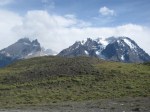
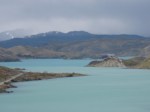
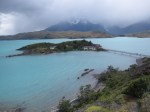
Puerto Natales is a small town that is essentially the gateway for getting to Torres del Paine.  Everyone I knew that had been to Torres del Paine told me that I really needed to go.  So, I arrived in Puerto Natales after a 5 hour bus ride from El Calafate, not really sure if I’d be able to give Torres del Paine the time that it really deserved.  I booked 3 nights at small hostel, hoping that I could do some type of day trek and see at least some of the greatness that Torres del Paine has to offer….. at least from afar.

I first located the tourism office down near the water and was informed that there were day trips up to Torres del Paine, but that a real excursion through the park would require anywhere from 2 to 7 days of trekking.  I wasn’t equipped for camping, nor did I have reservations for one of the hostels that were already booked.  I easily found a tour company in the center of town that assured me that I’d see the sights that I wanted to see.  I signed up not realizing that instead of a day of hiking, I instead would be driven around in a van with other people, making 14 stops along the way for some light hiking, photo-ops, and an occasional snack.  I’ll admit that initially, I was frustrated and a bit disappointed at myself for the lack of planning on my part and the limited exposure I would have with Torres del Paine.  But dealing with cold weather and extremely strong winds all day long left me exhausted and somewhat happy that everything worked out the way that it did.

It also gave me the time to relax and enjoy myself in the sleepy town of Puerto Natales.  Some of the highlights of my stay in Puerto Natales included having a beer at Baguales, a local brewpub in town.  I also came across a small vegetarian soup and sandwich shop called El Living.  While I’m not a vegetarian by nature, I was happy with the healthy food served and the availability of mate.  And with a small bookcase filled with old magazines (both in English and Spanish), I did not lack for any reading material, which was nice considering I haven’t read much since my Nook got stolen in Buenos Aires.

Punta Arenas

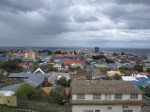
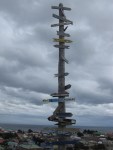
If you’re looking to visit the southern most, accessible city in South America so that you can brag about being at “The End of the World”, then you’d likely visit Ushuaia.  But, if you want to visit the southernmost city in South America of respectable size, then you’d visit Punta Arenas.  I was disappointed that my planning had left me unable to visit Ushuaia, but was still happy to be far enough south to be in the Magallanes region of South America.  I needed to go through Punta Arenas so that I could catch a flight to Santiago, Chile.  Initially, I didn’t have much interest in Punta Arenas and was only planning a night or two.  Instead, I recognized the need for some down time and scheduled 3 nights there.  Punta Arenas turned out to be a much more pleasant experience than I had expected.

I first checked into my hostel, Patagonia House, a house that has been re-configured to be a hostel.  A family lives there while guests from all over the world stay in the other available rooms.  While relaxing in your room upstairs, it’s not uncommon to hear some the kids playing Gears of War or Grand Theft Auto on their video game system right outside your door.  It’s never too loud and the place has a comfy, feeling like staying with your family.  I quickly made friends with two of my room-mates from Portland, Oregon (two of the few travelers I’d come across from the US), Brian and Blake, and decided to head out for some dinner.

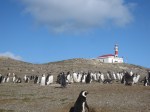
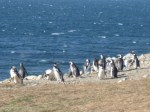
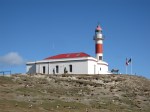
The next morning, having nothing on my agenda, I hopped a ferry to Isla Magdelena to see a colony of Penguins.  Upon arrival, you walk off the ferry and are surrounded by a multitude of penguins running around, burrowing in their holes, procreating, or taking a dump right in front of you.  It’s an episode of National Geographic right in your face.  I was having the time of my life.  But the bonus for me was the lighthouse that was located there.  After returning to town, I met up with Brian and Blake to explore the cemetery which very closely resembled the Recoleta Museum found in Buenos Aires (but much smaller).
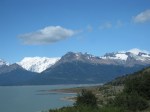
I spent my last day in Punta Arenas checking out the town and relaxing in coffee shops.  The next day, I’d be off to Santiago, Chile.

Patagonia: Part 1

San Carlos de Bariloche

Originally, when I started thinking about my visit to Patagonia and where I wanted to go, it had never occurred to me to visit San Carlos de Bariloche.  I was in my hostel in Mendoza having breakfast across from Emily, a nice young woman from Ireland, and we were discussing places that she had visited in Chile and Argentina.  “If you’re going to Puerto Natales and visiting Torres del Paine, you could do the “W” trek.  I’ve heard it’s great.”, she said.  “You should visit Bariloche in Argentina.  It’s beautiful.”  So here I was in Bariloche.  The first thing I noticed when I got out of the cab was how incredibly windy it was.  The next thing I noticed was how incredibly beautiful the lake was.  Here I stood at the doorsteps about to enter Patagonia and I couldn’t be happier.

Patagonia is an area in the southern part of both Argentina and Chile.  It’s where the hot and humid area of Argentina and Chile stops and it opens up into great big lakes, with great plains decorated with huge mountain ranges and glaciers.  Bariloche is a fun tourist town.  It has trendy streets filled with chocolate shops and small bistros selling artisanal beers or souvenirs.  Cafes that sell mate and wine are just up the street from the lake.  And of course you have the beautiful boardwalk area with health-nuts running along the lake.

I’ve come to regret it, but I only gave Bariloche one full day.  I could have easily relaxed here for a week or at least enjoyed three to five days sipping tea and reading books.  I got up early the only day I spent there and walked along the boardwalk until I spotted a chocolate shop and decided I needed a snack.  Afterwards, I bought my bus ticket to travel out to Puerto Pañuelo so that I could hike Cerro Llao Llao (pronounced ‘shao shao’).  The hike produced some incredibly beautiful pictures of Nahuel Huapi Lake.  I finished the night having a nice dinner and going to bed early.  The next morning I’d catch a flight to El Calafate.

El Calafate

While flying to El Calafate, I made the acquaintance of Tiffany, the woman sitting next to me on the plane.  After landing, I asked if she wanted to get out ahead of me and exit the plane.  She preferred to stay in her seat.  I said goodbye and offered that maybe we’d pass each other while in El Calafate.  But you say things like that so many times, rarely believing them. You understand that as a traveler you pass through so many lives and for the few times you actually cross paths again, there are a million more where the opportunity never manifests itself again.  Little did I know at the time how important meeting her would really be.

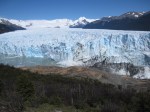
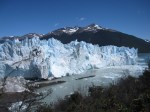
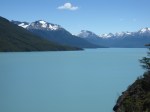
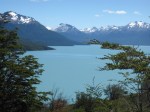
I located my hotel and then walked the mile and a half stretch into town to locate the Tourism Office.  I inquired about going to Perito Moreno, the giant glacier.  They provided a map, and informed me that it was an hour and a half bus ride to the site.  I located the bus station and bought my ticket for the next day.  The Perito Merito glacier is a massive ice shelf floating on an azure blue lake.  Perito Moreno glacier has been tamed with walkways that provide multiple balconies for viewing the glacier as well as protecting the landscape from the large numbers of people that come to visit this site every year.  A cafeteria is also on hand to feed the throngs of people that become hungry watching and photographing this incredible monument.  The weather was bright and sunny.  You can only walk for so long before stopping and staring at the glacier, hoping to hear the soft crack that precedes a big chunk of glacier that falls to the water below, leaving an azure blue imprint among the dirty remnants of the glacier where the chunk used to be.  It’s peaceful and captivating.

Back in El Calafate, I needed something to warm me back up.  Stopping in a bar near the artisinal market, I inquired to the bartender if they served any mate to which he replied “yes”.  Within moments of ordering my mate and sitting down at the bar, a woman’s voice called my name.  I turned to see Tiffany, whom I met on the airplane earlier, propped up on crutches and smiling at me.  When I asked her to join me for some mate, she readily agreed and sat down to provide me company for the night.  2 cups of mate turned into 2 beers, when she finally opened up about her story.  Tiffany uses crutches because she suffered a spinal cord injury after falling from a balcony in Dubai years back.  Despite doctors telling her that she’d never walk again, she set out to prove them wrong.  And she did.  She’s still paralyzed from the knees down, but can still walk with the help of two crutches.  Her next challenge….. to prove to herself and the world that she can travel for the next 13 months all over the world.  You can read her story and adventures at her blog, A Tale of Two Legs.

Serendipity is a very real thing.  I’ve known people in my life that seem like they’re plugged into this universe.  They ask for what they want and then they receive.  Through perseverance and a positive outlook, they overcome all obstacles and achieve the most incredible feats.  I too am plugged into the universe, but still feel awkward and doubtful at times.  But when I’m feeling unsure and doubtful of my life and purpose, someone like Tiffany shows up to remind me that almost anything is possible.  I have doubts and questions about my travels thus far.  Tiffany shows up and dispels my doubts and answers my questions.  I start to feel stronger and thank the universe for putting her in my path.

The next day, I have a lazy day and sleep in.  Later, Tiffany and I meet up for dinner and afterwards hug and say our goodbye’s.  She’s off to the glacier, and I need to make my way to Chile.  I’m starting to feel energized again.  My next stop is Puerto Natales where I’ll hopefully get a glimpse of Torres del Paine.

Vino

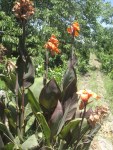
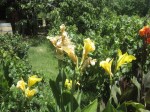
People from all over the world come to Mendoza, Argentina for primarily one thing: to taste the wines that have given Mendoza its reputation.  I was coming to Mendoza for that very reason.  Truth be told, Maipu is actually the center of many of the famous bodega’s.  Plan your trip accordingly as Mendoza is quite a bit busier and Maipu is more laid back.

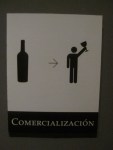
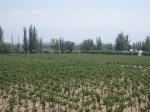
After checking into my hostel, I quickly booked a wine tour where you traveled between bodega’s on a bicycle.  Thoughts of riding a bicycle from one bodega to another, through wine fields and trying ample samples of wine raced through my head.  Contrary to my romantic notions, it was more like riding a bicycle between bodega’s on the streets of Maipu, in 100+ degree heat with 2 or 3 very small samples of wine.  We visited 2 bodega’s, Lopez and Cecchin, and one olive oil producer.  Lopez is an old wine producer that uses new methods to produce high-quality wine.  Cecchin is a family winery that produces organic wine.  The best part of the wine tour was the lunch provided at the end where we all spent together in and around a small pool.  The family ran a small vineyard, and for me, it was a cultural experience spent with my new friends from the hostel.

I hadn’t planned on staying in Mendoza much past that, but I found a place in Mendoza that was able to partially solve my technology problems.  Todo Computacion was able to look at my computer right away and fix one of the problems.  And, since I decided to stay 2 more days due to high airline ticket prices, it was inevitable that I try out one more one tour.  While walking back from lunch one day, purely by accident, I walked by and then into Trout and Wine, a small travel agency specializing in wine tours.  For double the price of my last wine tour, I was able to book another wine tour that included 4 bodega’s (one of which was also an olive producer), and a gourmet lunch.  No bicycling involved in this one, either.  I’d escape the heat (mostly) by being shuttled from place to place.

We started things off at Dante Robino with an explanation of how wine is produced and 4 very generous samples of Wine.  Next was Alta Vista, where we had another explanation of how wine is produced (let’s get to the wine samples – I’ve heard this before) and then 3 – 4 more generous helpings of wine.  It was by this time that I was getting a bit peckish.  Have no fear – a gourmet lunch was right around the corner at Tapiz, a winery with a nice boutique restaurant upstairs.  We started things off with a plate of bread, olive oil, and balsamico.  We were then treated to an appetizer of Gazpacho and then followed up with our main entree of some Asado.  During this time, we also were treated to another 4 generous samples of wine.  We finished things off with some helado for desert and were off to our final vineyard.  Lastly, we visited Carinae, a small, french-owned vineyard.  The owner, an astronomy enthusiast, named the Vineyard Carinae after what he felt is the most beautiful constellation in the southern hemisphere.  We were all treated to another tour of the facilities and an explanation of how wine is produced (we didn’t care this time, considering we were all a little buzzed).  In the end, we were treated to 4 more samples of wine.  This was the tour that I was hoping to have.  Obviously, I splurged a bit for this one, but it was well worth it.

At this point, I felt like the heat and humidity were getting to me.  I needed some cooler weather, and Patagonia was calling.

The mate always comes to you

When my friend, Lynn, discovered that I’d be going to Uruguay, she introduced to me Elian, a young woman she met the previous year in Minneapolis that was visiting from Uruguay.  Before arriving, I promised I’d contact her as soon as I got to Montevideo.  I was excited to spend some time with a local and make a new friend.

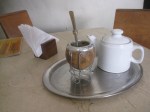
Before I left for my trip, one of my colleagues whom spent a year in Buenos Aires had told me about a drink that I must try called mate.  While in Argentina, I hadn’t really given it much thought.  And then, after arriving in Montevideo, it seemed like it was everywhere.  You see tons of men everywhere holding their gourd and bombilla in one hand, and their thermos tucked between the forearm of the hand holding the gourd and their chest.  What is this magical substance?  This link hopefully explains.  On my first day in Montevideo, I stumbled across the restaurant Facal and for dinner ordered a small pepperoni pizza and some mate.

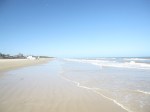
The next day, I shot off a text to Elian and headed out to explore the old town.  Like most historical centers, the old town is an area of cobblestone streets and people from Uruguay selling their artisanal wares.  I stumbled across Bacacay Cafe, a simple, tranquil cafe and decided to have some lunch.  Afterwards, I returned to my hotel where Elian was waiting to take me out and show me around.  She explained to me that she considered herself a terrible host because she wasn’t sure what to suggest and instead asked me what I was interested in doing.  We decided to go back to Facal, have a drink and then go to the Rambla and walk the beach.  The beach was the type of beach where you could walk for hours.  Women were sunning themselves and families were frolicking in the surf.

The next 3 days were spent exploring the city and spending time with Elian.  We checked out a lot of different restaurants, including Alebrijes, an excellent Mexican restaurant.  It was there that I was able to have a michelada, a drink from mexico essentially consisting of beer and salsa.  I was excited since I hadn’t had one in about a year.  My plan after Montevideo was to go to Punta del Diablo, but Elian told me that I should spend my time in Cabo Polonio instead.  They were close by, so I thought it could be possible to do both.  So, I decided on a bus to Cabo Polonio.

Cabo Polonio

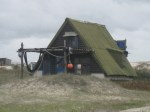
If anyone were to ask me to sum up Cabo Polonio, I’d probably tell them that it’s basically a hippie commune on the beach.  There are few hotels, and the hostels are very basic.  I was lucky – my hostel, Del Cabo, had warm showers, a kitchen, and one outlet to charge your phone.  Leave your computer and other items at home – Cabo Polonio is a place to get lost for a couple days or week.  Cabo Polonio is also a protected park and the park currently does not allow any new construction.

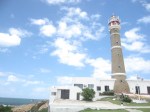
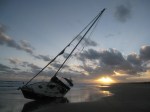
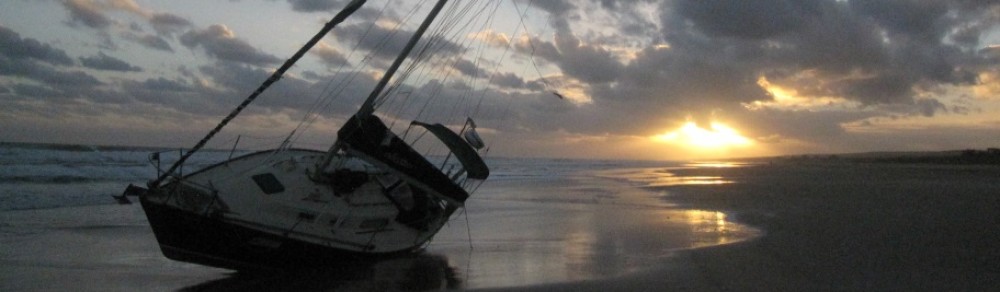
After arriving in Cabo Polonio, I quickly decided against going to Punta del Diablo in favor of enjoying Cabo Polonio with all the time that I had.  I’m glad I did because I spent most of the next day visiting the lighthouse, watching the sea lions sun themselves and bark at each other on the rocks, sharing some mate with friends, and of course, walking the beach.  During the evening, I walked the beach with my new friend from the hostal, Ivana.  We came across a capsized boat on the beach.  It couldn’t have been any longer than 30 feet.  The sailor was living on board and I believe trying to figure out how to get his boat back in the ocean.  Nonetheless, it provided some amazing photographs at sunset.

The next morning, I said goodbye to my new friends and headed back to Montevideo.  I would spend some more time with Elian before heading out to Mendoza, Argentina.

Back in Montevideo

Sitting in Cafe Bacacay on my last day in Montevideo, I ordered a Mate and something to eat.  While starting to sip water from my cup, I noticed an older couple situated near my table looking at me quizzically, laughing, and then talking to the waiter about something.  Not long after, the waiter approached me and starts to give me some advice on “how to drink” mate.  First off, he tells me that no one drinking mate bends over and sips from the cup.  “The Mate always comes to you.”  You always bring the cup up with your hand and then sip.  Next, he explained to me that if the taste of the mate starts to become weak, that one can adjust the straw by scooping in and then pulling it to a different side about 45 to 90 degrees.  And lastly, when you start to drink a cup of mate, you need to add just a bit of cold water first, so the mate can expand and grow.  When it’s mostly filled the cup, then you can pour hot water, near the straw and start drinking.  I’ve come to appreciate these fish-out-of-water experiences.  They’re the experiences that, while embarrassing at times, make me feel like I’m having a truly cultural experience.  Nothing is ever gained if you don’t screw it up first.

Saying goodbye and moving on to my next destination is difficult.  Uruguay has been one of the more enjoyable and surprising experiences of my trip.  It wasn’t even on my radar to go until I started hearing about it from other people.  I think this is the travel that I enjoy most.  I’ve met incredible people here and will hopefully return someday.

A hop, skip, and a jump

Technology issues, abound.  Sorry for the lack of updates but I’m forced to work on my blog when my computer is actually working.  Hopefully I can get this fixed once I’ve reached Santiago, Chile.

Anyways, I’ve been restless.  After 8 days in Buenos Aires, I was starting to feel stuck.  I wasn’t really enjoying the big city anymore and felt the need to start moving again.  The humidity was getting to me and I was tired of solving technology issues.  I decided that my next destination would be Iguazu Falls and then Uruguay after that.

By foregoing any sense of planning, I’m not really able to enjoy the benefits of reduced airfare that is typically available to someone that plans ahead.  Needing to move forward, I booked round-trip airfare between Buenos Aires and Iguazu.  After arriving in Iguazu, I took a taxi and quickly located my place of residence for the next two nights, Poramba Hostel.  It’s a very basic hostel that is only four to six blocks from the center of town.  I headed out to establish my surroundings.  The town of Iguazu is a laid-back town that mostly survives on tourism.  I returned to the hostel and quickly befriended my roommates.

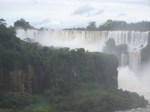
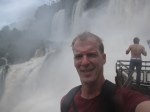
The next day, we all got up early and headed out to the falls.  Two of my roommates were attempting to do the Brazilian side in the same day.  Lacking a Brazilian passport, I wasn’t worried about fitting in too much.  We located the train that transports visitors to the top and got on.  Note:  There are two trains and the first one only takes you a short distance.  Once you reach the first destination, you’re forced to get off and re-enter the line for the train.  I think it’s better if you walk to the first destination and then get in line, otherwise, you’re burning up time changing trains.  After finally reaching the top, we were treated to some incredibly majestic waterfalls.  Make sure you bring a rain jacket as you’ll get wet from the mist.  We all took the train back, and did the 4 smaller falls which I thought offered more impressive views of all the falls there.

The next day, I hopped my flight back to Buenos Aires and readied for my boat to Colonia, Uruguay.  I had six hours to spare, so I burned it up having drinks and using the WiFi at the TGI Friday’s located around Puerto Madero.  The high-speed boat to Colonia takes one hour to cross the bay.  I decided to go with Colonia Express whom I thought was very professional and also the cheapest of the options.  You can also drink beer and shop their small duty-free shop while enjoying your ride to Uruguay.

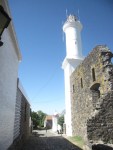
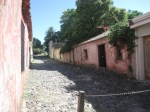
Colonia del Sacramento is a sleepy little town.  Their historical center is full of cafe’s and restaurants.  The view from the lighthouse is incredible.  I ended up renting a motor scooter during the day so that I could ride up to some of the beaches north of town.  Before arriving in Colonia, I was told that Uruguay had some of the best beaches around.  I was impressed so far and looking forward to experiencing some more of Uruguay’s treasured beaches near Montevideo and Punta del Diablo (hopefully).  In addition to visiting the beaches, I was also able to check out the Museo de los Naufragios y Tesoros, the most ridiculous pirate / nautical museum I think I’ve ever seen.  The scariest thing about the museum was the horrible paper-mache pirates on display.  Outside the museum, one can also visit a small, abandoned Colosseum.  Unfortunately, one cannot enter due to it being surrounded by metal fencing.  I don’t believe that’s a problem in that it looks extremely unimpressive from the outside.

The next day, I would be arriving in Montevideo via a two hour bus ride.  It was nice to be moving around, but I was looking forward to a couple of days of leisure.